
Gutter Systems Built For Redmond's Wet Eastside Climate
Why Redmond Rooflines Demand Seamless Gutters
Homes across Redmond sit under a dense canopy of Douglas fir and cedar, and that tree cover punishes any gutter system not built for it. Needles and fine debris settle into open runs through fall, packing the channels right as the wettest stretch of the year arrives. When the flow chokes, water spills over the edge and finds the fascia, the soffit, and eventually the framing behind them. A seamless system removes the joints where sectional gutters fail first, giving debris fewer places to catch and water a clean path off the roof. Properties here range from newer builds in the tech corridor to established homes with decades of growth overhead, and each load profile calls for a different approach to sizing and guard selection. The forty-plus inches of rain the Eastside sees every year means undersized gutters and standard downspouts simply cannot keep pace during the heavy storms that roll off the Cascades. Owners who have lived through an overflow during a January downpour understand how fast trapped water turns into rotted wood and stained siding. The right system is fabricated to the exact length of each roofline, pitched correctly, and fastened to carry the weight of saturated debris without pulling loose. That combination is what separates a gutter run that protects a Redmond home for twenty years from one that needs replacing after five wet seasons.
Matching The System To Your Redmond Property
Choosing a gutter system in Redmond is less about appearance and more about how a roof sheds water under real conditions. The volume coming off a steep pitch during a Cascade storm is far greater than what a flatter suburban roofline produces, and the gutter and downspout capacity has to match. Six-inch K-style profiles paired with oversized outlets move that water before it can back up, while the standard five-inch runs builders often install fall behind in the first serious rain. Material matters too. Aluminum resists the corrosion that destroys cheaper steel in this damp air and delivers strong value across most Redmond homes, while copper suits owners who want a system that lasts for decades and ages into a rich patina. Beyond the metal, the details decide everything: how the run is slope-set, where outlets are placed to avoid pooling, and whether the hardware can survive years of moisture. Tree load shapes guard choice as well, since the fine needle debris common here slips straight through coarse screens that work fine elsewhere. Getting these factors right for a specific property is what keeps water moving away from the home rather than into it, season after season. The same roof that handles a light shower without complaint can fail badly in a sustained downpour if the system behind it was never engineered for the conditions Redmond actually delivers.

Seamless Runs Sized For Heavy Rain
Seamless gutter installation is the foundation of protecting a Redmond home from Pacific Northwest rain. Sectional gutters rely on joints that work loose and leak as the metal expands and contracts through wet winters and dry summers, and those seams are almost always where the first overflow shows up. Forming each run on site to the exact dimensions of the roofline eliminates those weak points entirely, leaving a continuous channel that carries water cleanly to the downspouts. For homes shaded by fir and cedar, that smooth interior also gives needle debris far fewer places to lodge and build into a clog. Every system gets sized for the volume a Redmond roof actually produces during a heavy storm, which usually means stepping up from the builder-grade five-inch profile to a six-inch channel with larger outlets. Runs are pitched to drain fully so standing water cannot sit and corrode the metal, then fastened with hardware chosen to hold the weight of saturated debris without pulling away from the fascia. The result is a gutter system that disappears into the background of a home and simply does its job through the wettest months, year after year, instead of demanding attention every time the forecast turns.
Built-In And Older Gutter Replacement
Many established Redmond homes were built with integrated or built-in gutters set into the roof edge, and when those systems age out they fail in the worst possible way. Water gets behind the fascia and into the structure long before anything shows on the surface, quietly rotting the wood that holds the roof edge together. By the time a stain appears on an interior wall, the damage underneath is often extensive. Replacing a built-in system is more involved than swapping a standard run because it means rebuilding the roof edge itself, repairing any compromised decking and fascia, then detailing a modern seamless gutter to shed water away from the home for good. The same care applies to older exterior gutters mounted in ways that trap moisture against the rafter tails, a real liability in this marine climate where wood rarely fully dries out. Correcting that detailing protects the most vulnerable part of the roof. Owners who address a failing built-in system before the rot spreads almost always spend less than those who patch it through another winter and end up rebuilding far more than the gutters. Catching the problem at the gutter stage keeps it from becoming a framing repair, which is the outcome no homeowner wants to discover mid-winter.

Guards Matched To Local Tree Load
Gutter guards earn their place on a Redmond home because the local tree load is relentless. Douglas fir needles and cedar debris are fine enough to slip through the coarse screens that handle broad leaves elsewhere, so a guard that works in one region can be useless under this canopy. The right micro-mesh or fine-screen profile blocks that needle debris while still letting high rainfall volumes pass through, which is the balance that actually keeps a system flowing through fall and winter. Installed as part of a complete gutter system rather than a standalone add-on, the guard, the channel, and the downspouts all work together for a specific roof and its specific debris problem. That integrated approach is what separates a guard that cuts the dangerous fall cleaning down to an occasional rinse from one that simply traps debris on top and creates a new mess. For owners tired of climbing ladders every October to clear packed needles, a properly matched guard system turns gutter maintenance from a seasonal chore into a near-afterthought, while keeping water moving where it belongs during the heaviest storms of the year. The fine debris that defeats a generic guard never gets the chance to build up, and the seasonal climb to clear packed needles off a tree-shaded Redmond roof becomes a thing of the past rather than a yearly hazard.
Comprehensive Gutter Installation Services in Bellevue
Tailored to Your Needs
From seamless installation to built-in gutter replacement and storm-ready guards, our services cover the full range of what Bellevue homes and businesses need to manage Pacific Northwest rainfall.
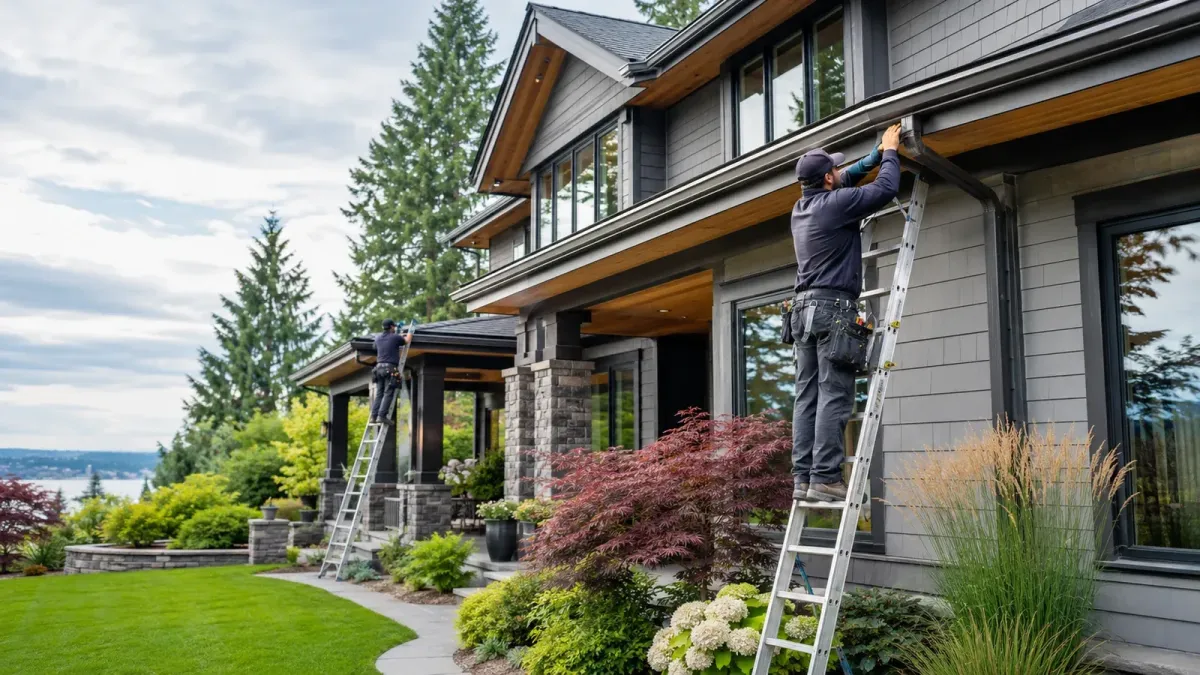
Leak-free seamless runs fabricated on site for your Bellevue home.
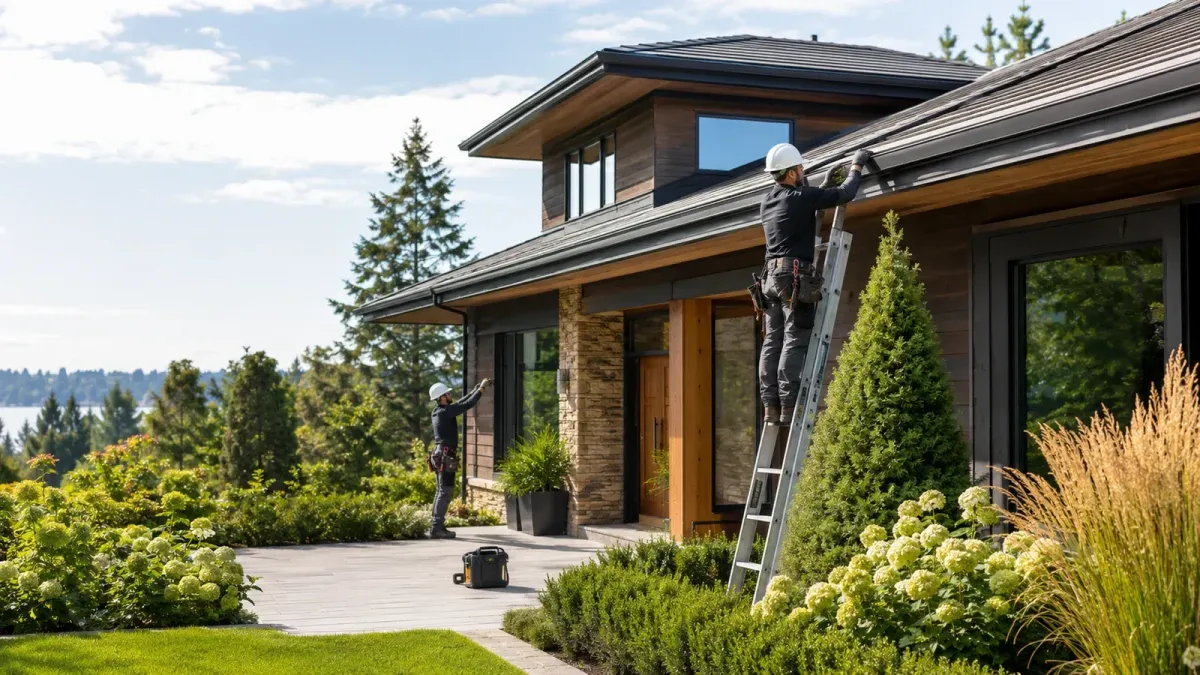
Stop hidden water damage from failing built-in gutters in Bellevue.
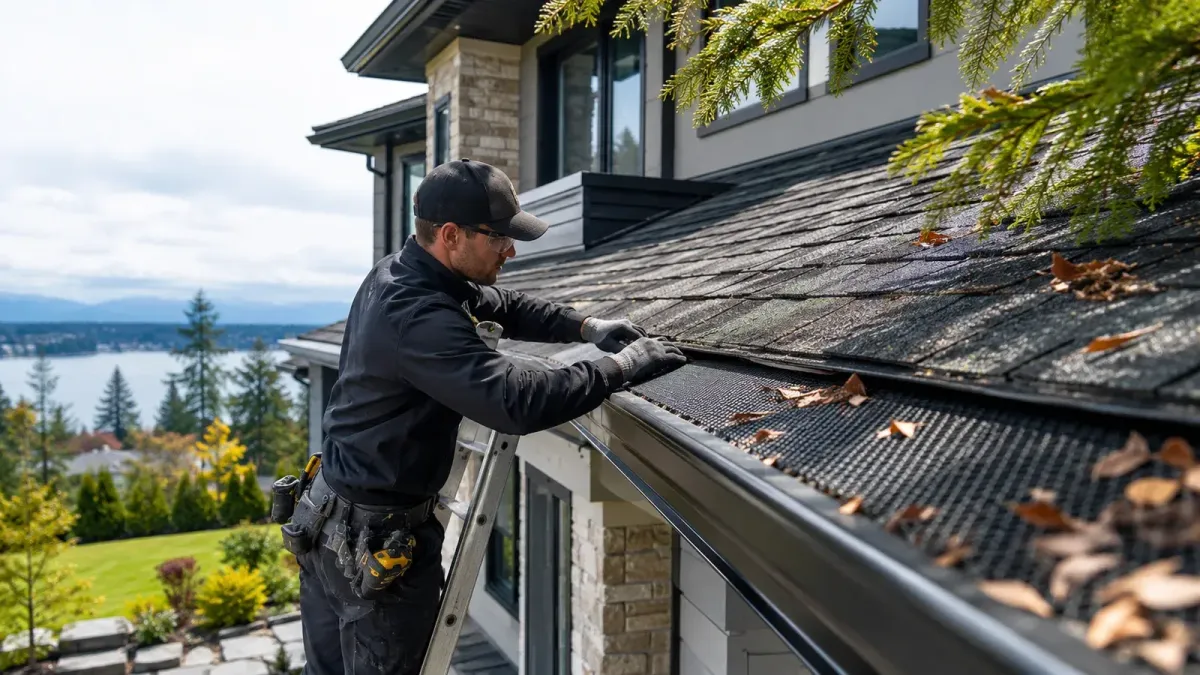
Keep fir needles and debris out of your Bellevue gutters.
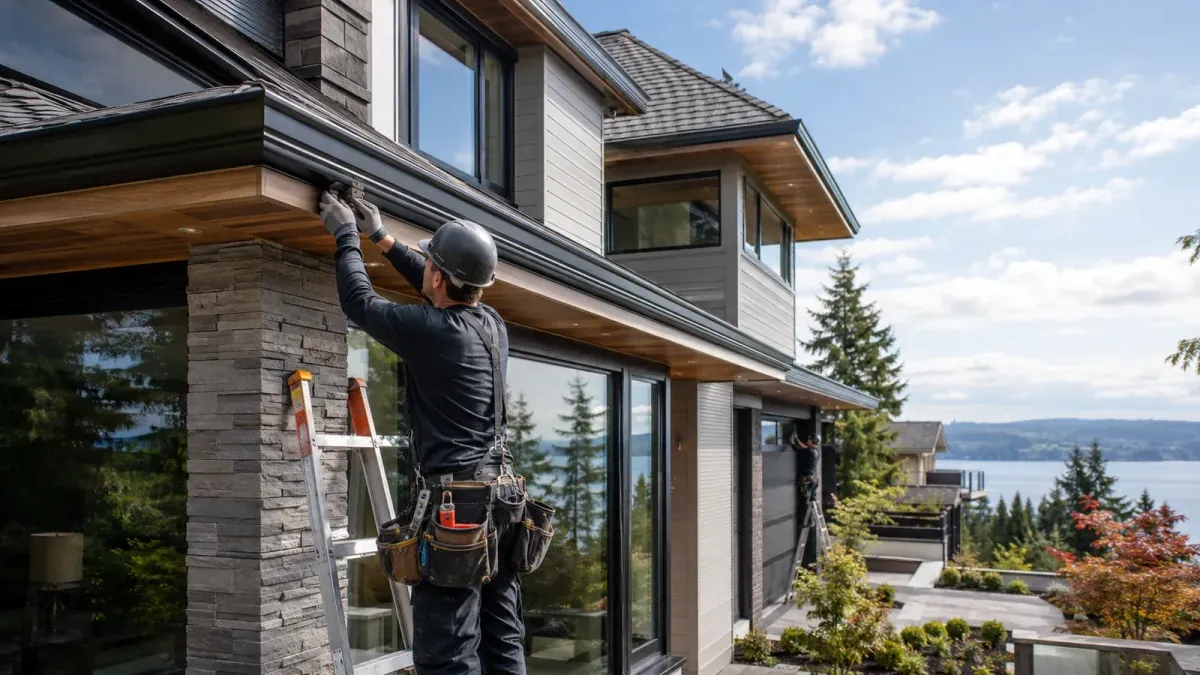
Protect your roof edge with a proper fascia gutter conversion.
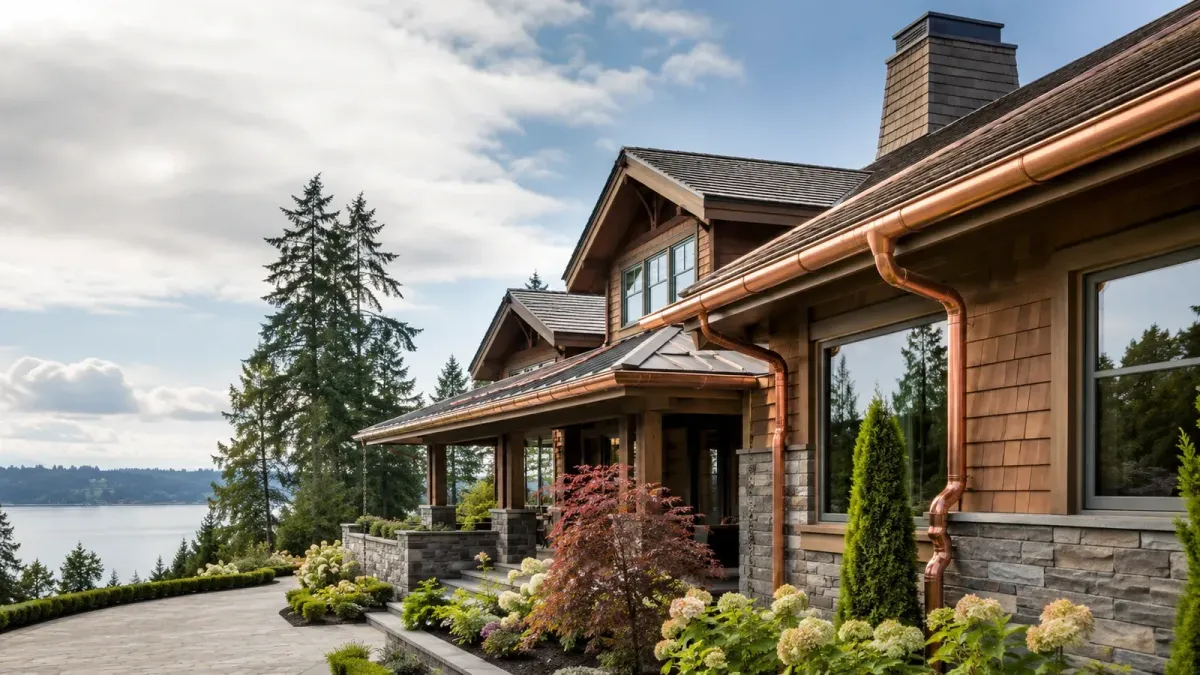
Premium copper gutters that age beautifully on Bellevue homes.
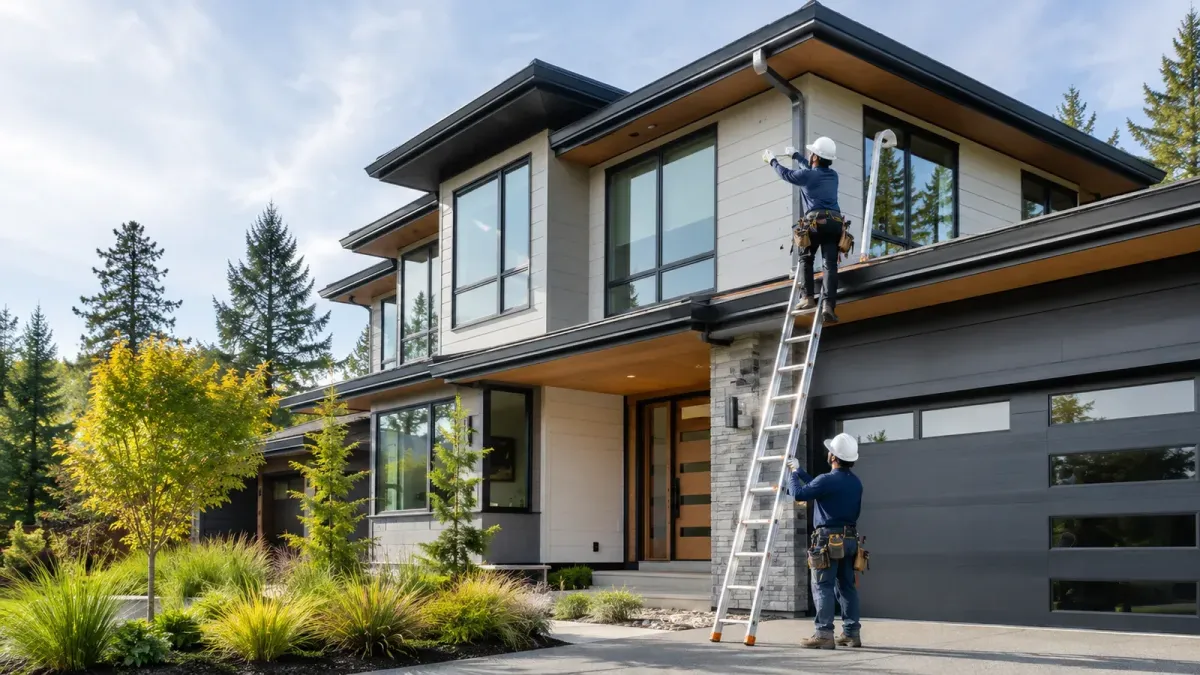
Durable, value-driven aluminum gutters for Bellevue weather.
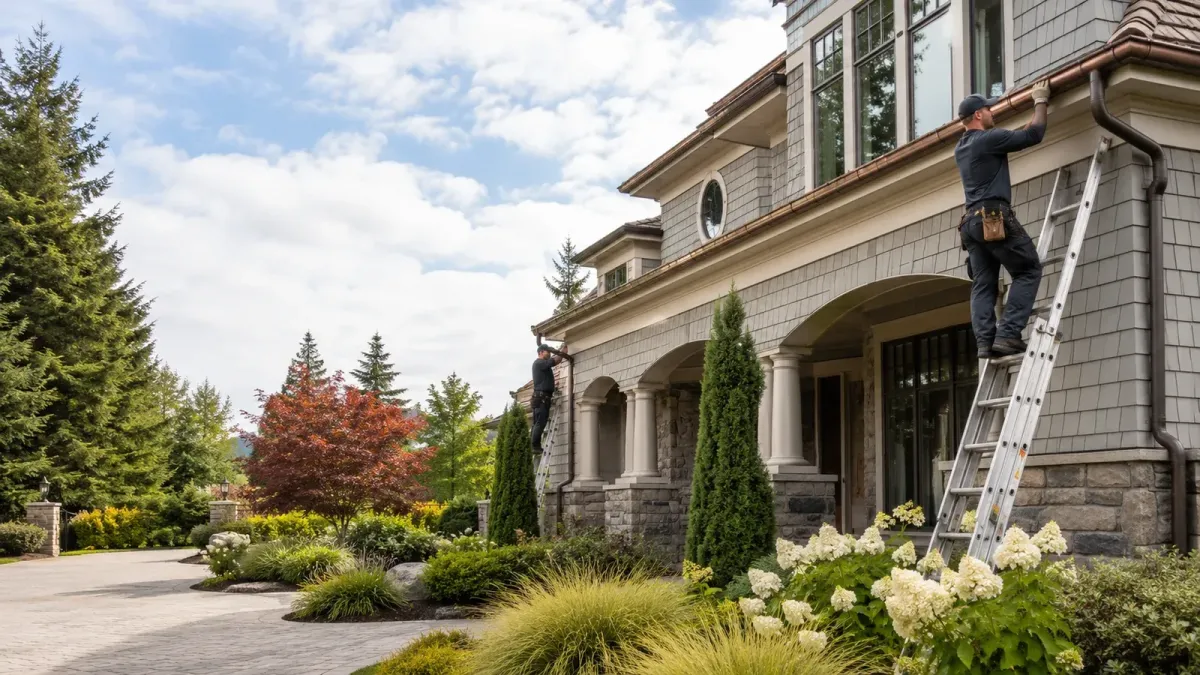
Timeless half-round gutters matched to your Bellevue home.
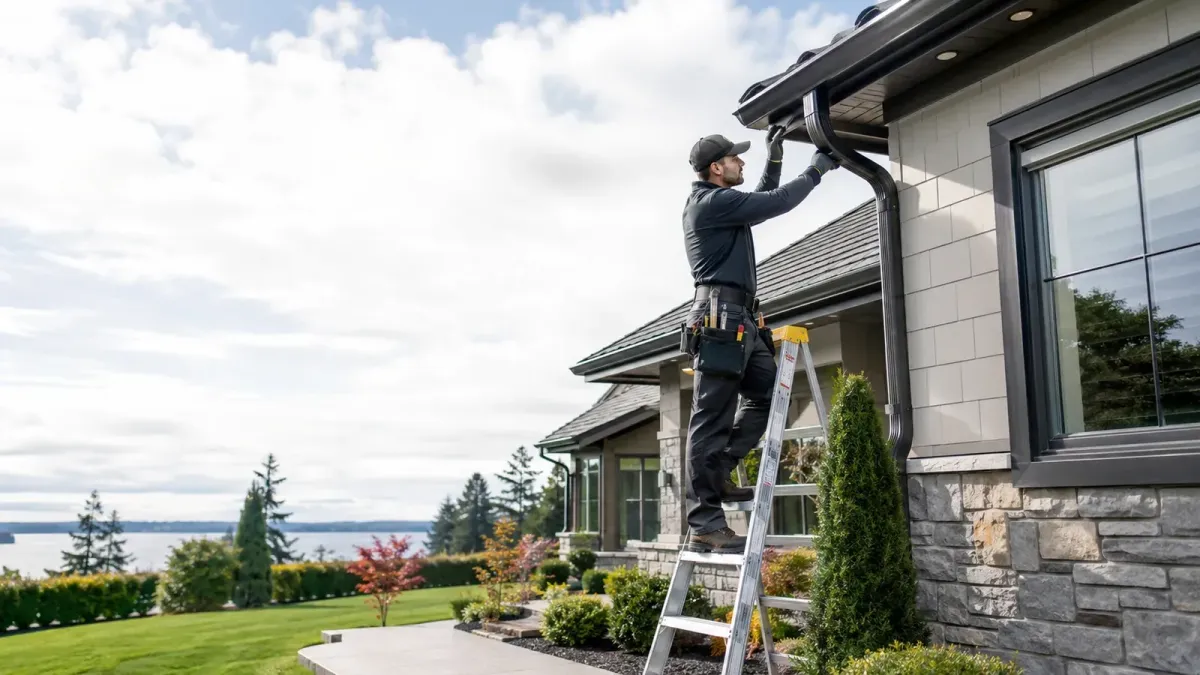
Move stormwater away from your Bellevue foundation for good.
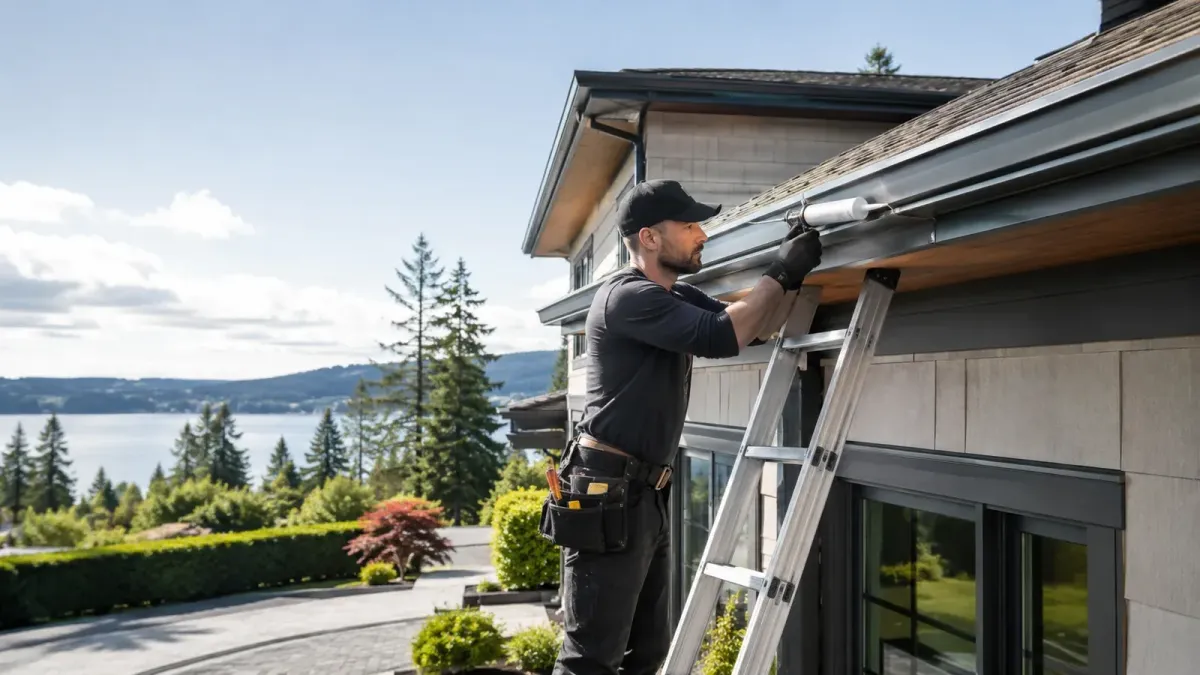
Honest gutter repairs that extend the life of your system.
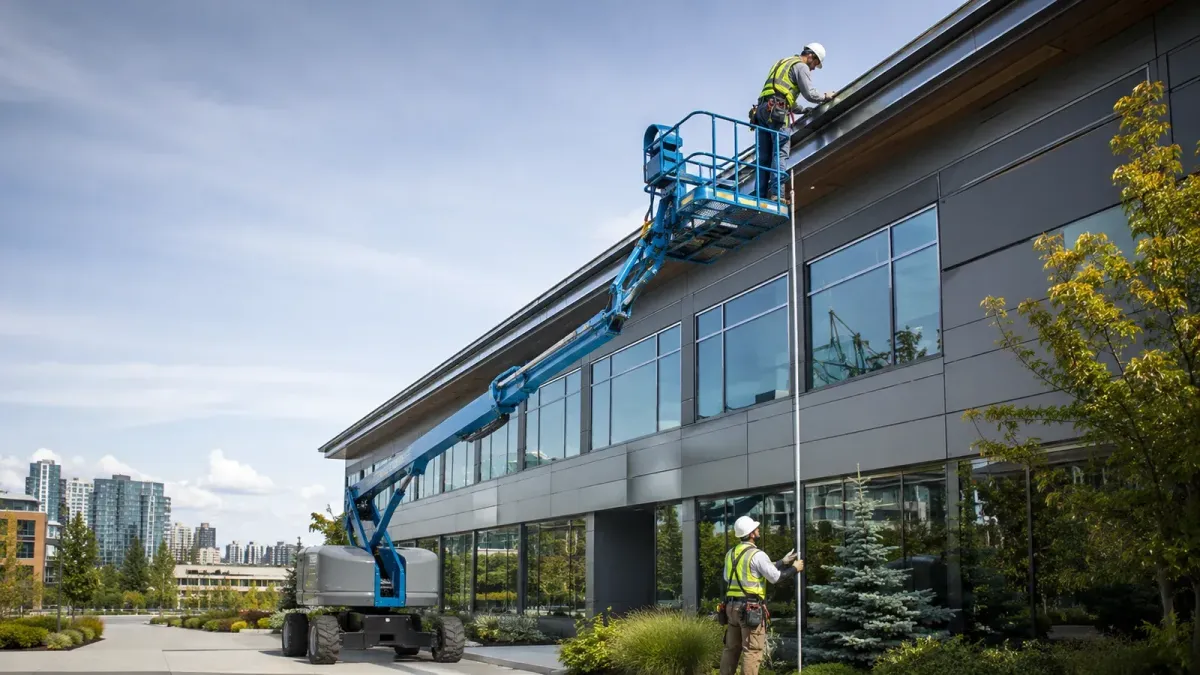
Large-capacity gutter systems for Bellevue commercial properties.
Frequently Asked Questions
Gutter Installation can be complex, and we’re here to provide answers to common questions. Here are some frequently asked questions from our clients.
Frequently Asked Questions about Gutter Installation Bellevue, WA
How much does gutter installation cost in Bellevue, WA?
Cost depends on linear footage, material, and whether you are replacing built-in gutters or hanging new seamless runs. Aluminum is the most budget-friendly option for most Bellevue homes, while copper sits at the premium end. We give a clear written quote after measuring your roofline so there are no surprises.
What gutter size do I need for Bellevue's rainfall?
With forty-plus inches of annual rain, most Bellevue homes do best with 6-inch K-style gutters and oversized downspouts rather than the standard 5-inch. Larger profiles carry more water during the heavy Cascade storms that overwhelm undersized systems.
How do seamless gutters handle fir needles and debris?
Seamless gutters remove the joints where Douglas fir needles and cedar debris usually pack in and cause clogs. Pair them with the right guard system and your gutters keep flowing through fall and winter with far less maintenance.
Should I replace the built-in gutters on my older Bellevue home?
If your 1960s-era home has built-in or box gutters that leak, they are likely rotting the fascia and roof edge behind them. Replacing them with a modern seamless system stops the hidden water damage and is usually more cost-effective than repeated repairs.
Do you handle gutter permits and King County code?
Standard gutter replacement rarely needs a permit, but drainage tie-ins and larger projects can. We work to King County standards on slope, downspout sizing, and discharge so your system performs and stays compliant.
How long do new gutters last in the Pacific Northwest?
With proper installation, aluminum seamless gutters commonly last 20 or more years here, while copper can last several decades. The marine climate is hard on cheap fasteners, so we use corrosion-resistant hardware on every job.
Still Have Questions About Gutter Installation Bellevue, WA?
Speak With a Trusted Gutter Installation Expert Today.
What Our Satisfied Clients Have to Say About Bellevue Gutter Installation
We pride ourselves on delivering great results and experiences for each client. Hear directly from home and business owners who’ve trusted us with their Gutter Installation needs.

They replaced the failing built-in gutters on our 1965 rambler near Lake Hills and finally stopped the water that was wrecking our fascia. Clean work and no leaks through the whole wet season.
Karen M. Bellevue
Our old gutters overflowed every heavy rain. The new seamless aluminum system handles the downpours and the fir needles way better. Crew showed up on time and cleaned everything up.
David R. Redmond
We wanted copper to match our mid-century home and they delivered. The work is clean, the patina is starting to come in, and the whole system drains perfectly even in October storms.
Priya S. Kirkland
The Trusted Gutter Installation Expert Near You
Ready to hear more about expert services at Bellevue Gutter Installation?
Contact us today to receive a detailed, no-obligation quote.
Monday: 8:00 AM – 6:00 PM Tuesday: 8:00 AM – 6:00 PM Wednesday: 8:00 AM – 6:00 PM Thursday: 8:00 AM – 6:00 PM Friday: 8:00 AM – 6:00 PM Saturday: 9:00 AM – 3:00 PM Sunday: Closed | Emergency gutter repair and storm-damage appointments available by request.


