
Keeping Kirkland Homes Dry From Roof Edge To Foundation
What Lakeside Weather Does To Aging Gutters
Proximity to Lake Washington gives Kirkland properties a damp, marine-influenced climate that never really lets exterior wood dry out, and gutters bear the brunt of it. Constant moisture accelerates corrosion on cheap metal and breaks down the sealant in sectional joints faster than owners expect, so a gutter system that might last in a drier region starts leaking here far sooner. Add the heavy seasonal rainfall rolling in off the Cascades and the fine needle debris from the firs and cedars common across these neighborhoods, and the demands on a gutter run climb quickly. Homes in Kirkland span a wide range, from compact older bungalows near the waterfront to larger hillside builds with complex rooflines and steep pitches that dump water fast. Each one needs a system sized for the volume its roof actually produces, not a one-profile-fits-all install. When gutters fall behind, the overflow does not just make a mess. It saturates the fascia, works into the soffit, and can travel down behind siding to reach framing that is expensive to repair. A seamless system fabricated to the roofline, pitched correctly, and built with corrosion-resistant hardware is what keeps that water moving cleanly off the structure and away from the foundation through every wet month. Owners who have watched an overflow sheet down a wall during a winter storm rarely underestimate the problem twice, and the fix is almost always a system that was built for these conditions from the start.
Picking The Right Profile For Your Roofline
Selecting the right gutter setup for a Kirkland home comes down to matching capacity and material to the conditions the property actually faces. A steep hillside roof sheds water at a rate that overwhelms standard five-inch gutters during a real downpour, so stepping up to six-inch K-style channels with larger downspouts is often the difference between a system that keeps pace and one that spills over every heavy rain. Material choice follows the same logic. Aluminum handles the damp marine air without the rust that ruins steel and offers strong value for most homes, while copper rewards owners of craftsman and mid-century houses with a system that lasts for decades and develops a distinctive patina. The placement of outlets, the slope of each run, and the grade of fastener all factor into how long the install holds up against constant moisture. Tree cover drives guard selection too, since the fine fir and cedar debris around Kirkland slips through coarse screens that stop only broad leaves. Getting these decisions right for a specific roof is what turns a gutter install into lasting protection rather than a repeat project a few wet winters down the road. On a lakeside lot where the damp never fully lifts, that margin between a system that endures and one that fails early is decided entirely by how carefully it was specified for the conditions it has to survive.
Seamless Installation For Lakeside Conditions
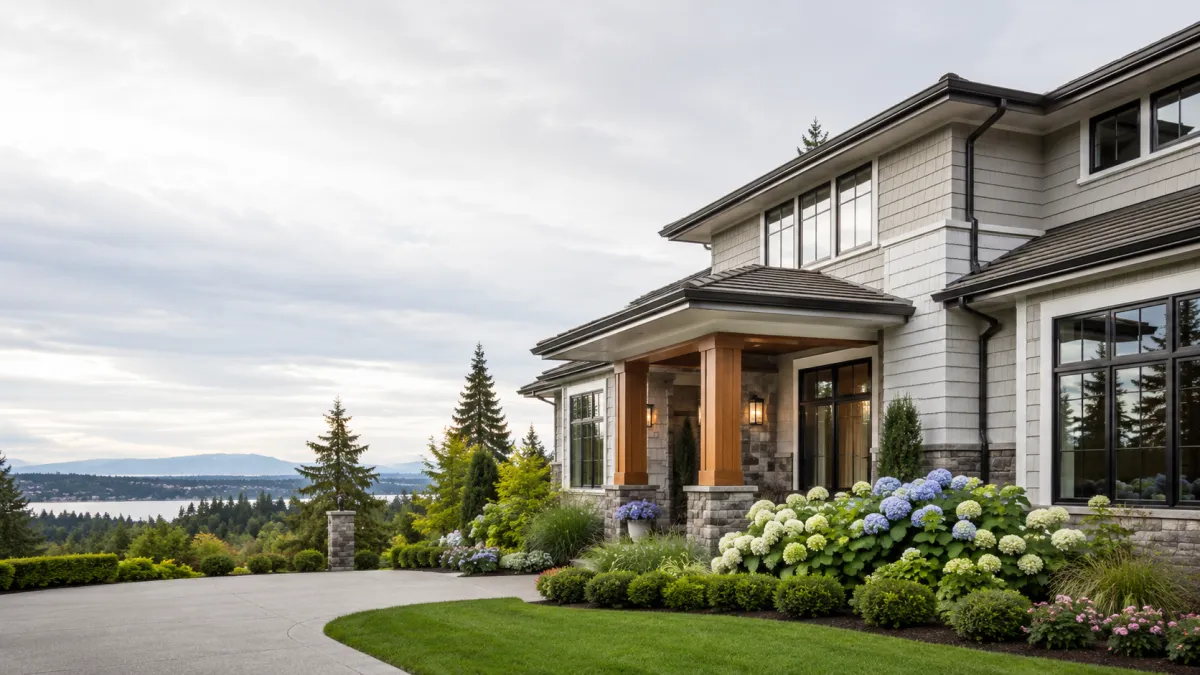
Seamless gutter installation gives a Kirkland home the leak resistance that matters most in a climate this wet. The joints in sectional gutters are the first thing to go as the metal cycles through temperature swings and the sealant degrades under constant moisture, and once a seam starts weeping, the overflow follows close behind. Forming each run on site to the precise length of the roofline removes those joints altogether, leaving a continuous channel with no built-in weak points. That continuous interior also matters under the fir and cedar canopy common around Kirkland, where fine needle debris looks for any seam or fastener to catch on and start a clog. Every system is sized to the real volume a roof produces during a Cascade storm, which for steeper Kirkland rooflines usually means a six-inch channel rather than the builder-standard five. Runs are pitched to drain completely so no water lingers to feed corrosion, then anchored with marine-grade hardware that resists the salt-tinged damp air blowing off the lake. The payoff is a gutter system that quietly carries water away from the home through the worst of the wet season, instead of becoming one more thing that needs watching every time it rains.
Replacing Failing Older Gutter Systems
Older Kirkland homes frequently arrive with gutter systems that have simply reached the end of their service life, whether that means failing built-in gutters set into the roof edge or exterior runs mounted in ways that trap moisture against the wood. Both situations cause the same hidden problem: water working into the structure where no one sees it until the rot is well established. Built-in systems are especially deceptive because the damage happens behind the fascia, often showing up first as a stain on an interior ceiling long after the roof edge has begun to deteriorate. Replacing these systems means more than hanging a new run. It calls for rebuilding the roof edge, repairing compromised decking and fascia, and detailing a modern seamless gutter that sheds water cleanly away from the home. The same attention applies to converting poorly mounted exterior gutters that wick moisture back into the rafter tails, a genuine concern in Kirkland's marine air. Addressing a failing system early, before the moisture spreads into framing, almost always costs an owner far less than nursing it through another wet winter. The hidden nature of the damage is exactly what makes early replacement the economical choice, since the repair bill grows quietly behind the fascia for every season the failing system stays in place.
Debris Control For Fir And Cedar Cover
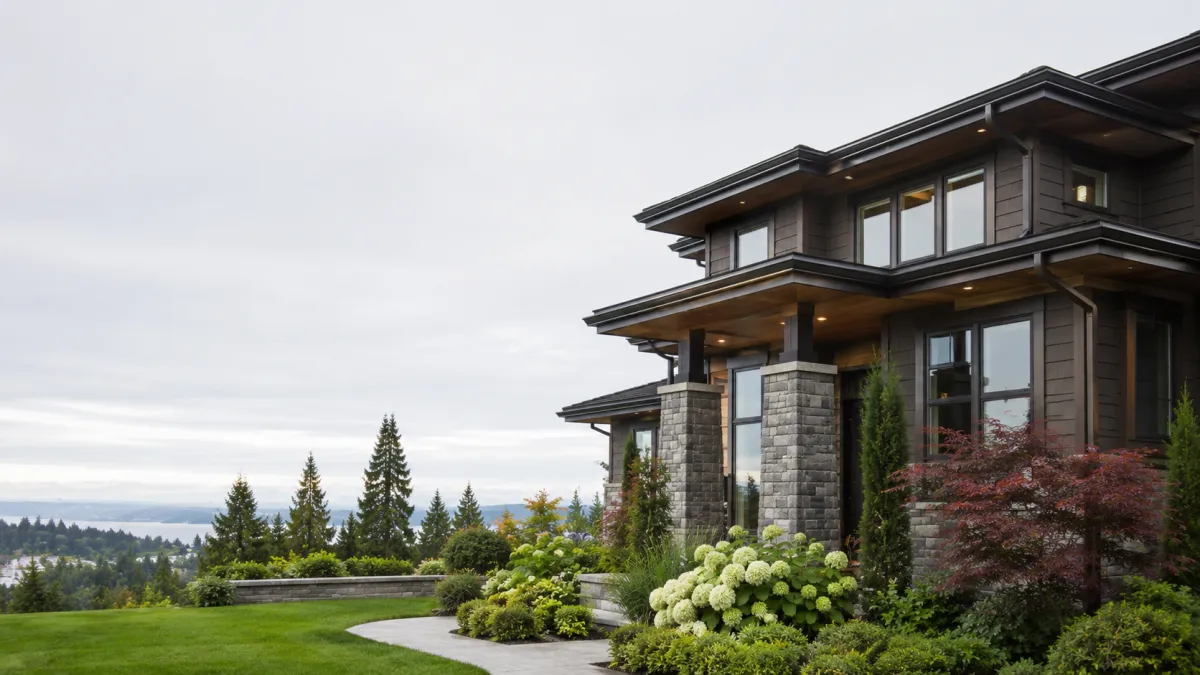
Gutter guards are close to essential on a Kirkland home shaded by fir and cedar. The needle debris these trees drop is fine enough to pour straight through the coarse mesh that handles ordinary leaves, so a guard that performs in a different region can do almost nothing here. A properly specified micro-mesh or fine-screen guard blocks that needle load while still allowing the high rainfall volumes Kirkland sees to flow through unimpeded, which is the balance that keeps a system clear through the wettest stretch of the year. The key is installing the guard as one component of a complete, well-built system rather than bolting it onto whatever gutters happen to be there. When the guard, the channel, and the downspouts are all matched to a specific roof and its specific tree cover, the result is a system that actually reduces maintenance instead of creating a new layer of debris to deal with. For owners worn out by the annual ritual of clearing packed needles before the rains set in, the right guard system turns that hazardous fall cleaning into an occasional rinse and keeps water moving where it should during every heavy storm. For a Kirkland home under steady fir and cedar cover, that reliability through the wet months is the whole point, and it comes only from a guard chosen for the debris the property actually drops rather than a generic screen pulled off a shelf.
Seamless Gutters Built For Pacific Northwest Rain
Proudly serving Bellevue, Redmond, Kirkland, Sammamish, Issaquah and Mercer Island for 9+ years.
Comprehensive Gutter Installation Services in Bellevue
Tailored to Your Needs
From seamless installation to built-in gutter replacement and storm-ready guards, our services cover the full range of what Bellevue homes and businesses need to manage Pacific Northwest rainfall.
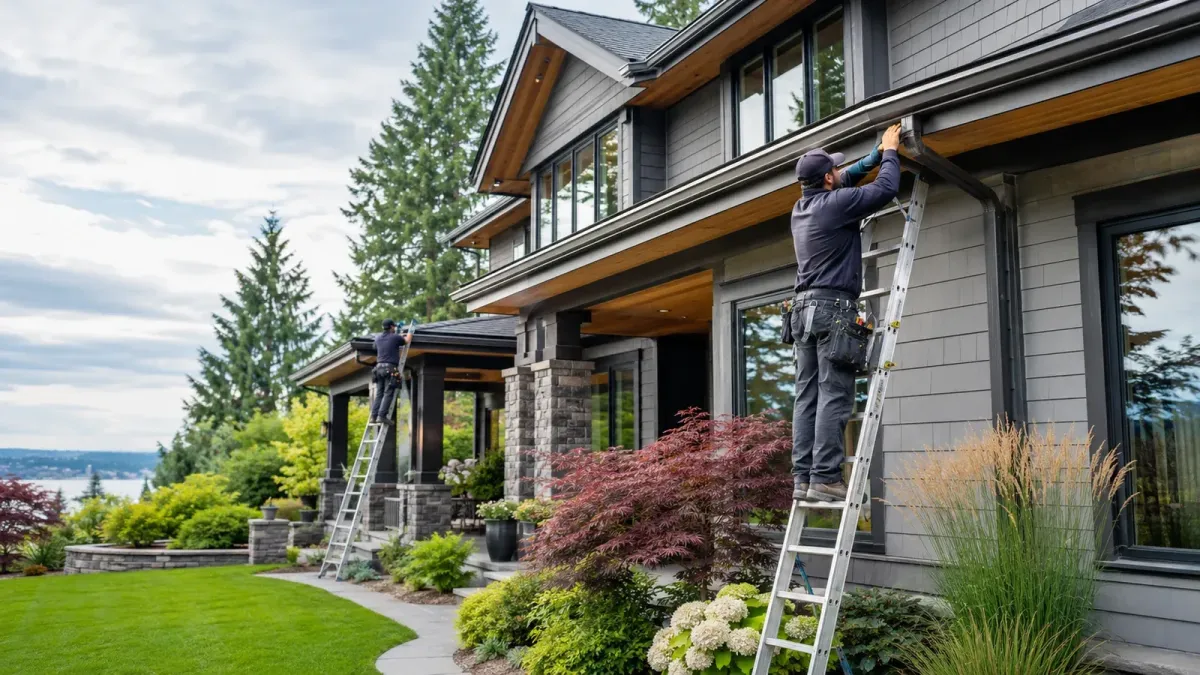
Leak-free seamless runs fabricated on site for your Bellevue home.
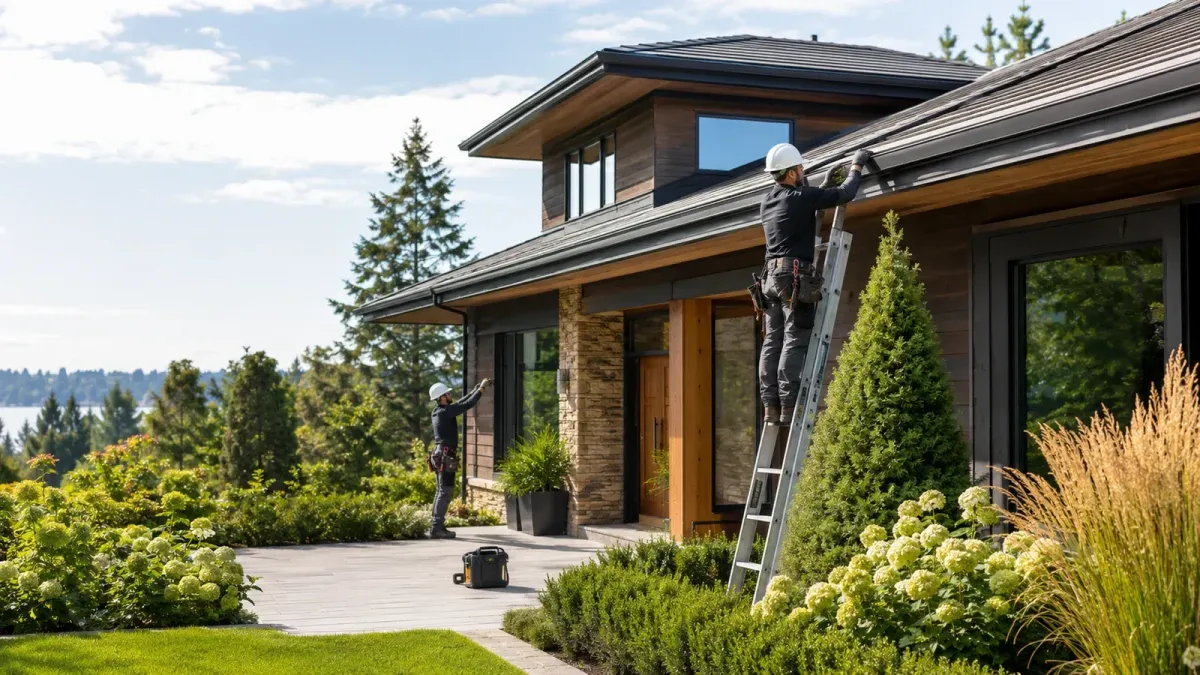
Stop hidden water damage from failing built-in gutters in Bellevue.
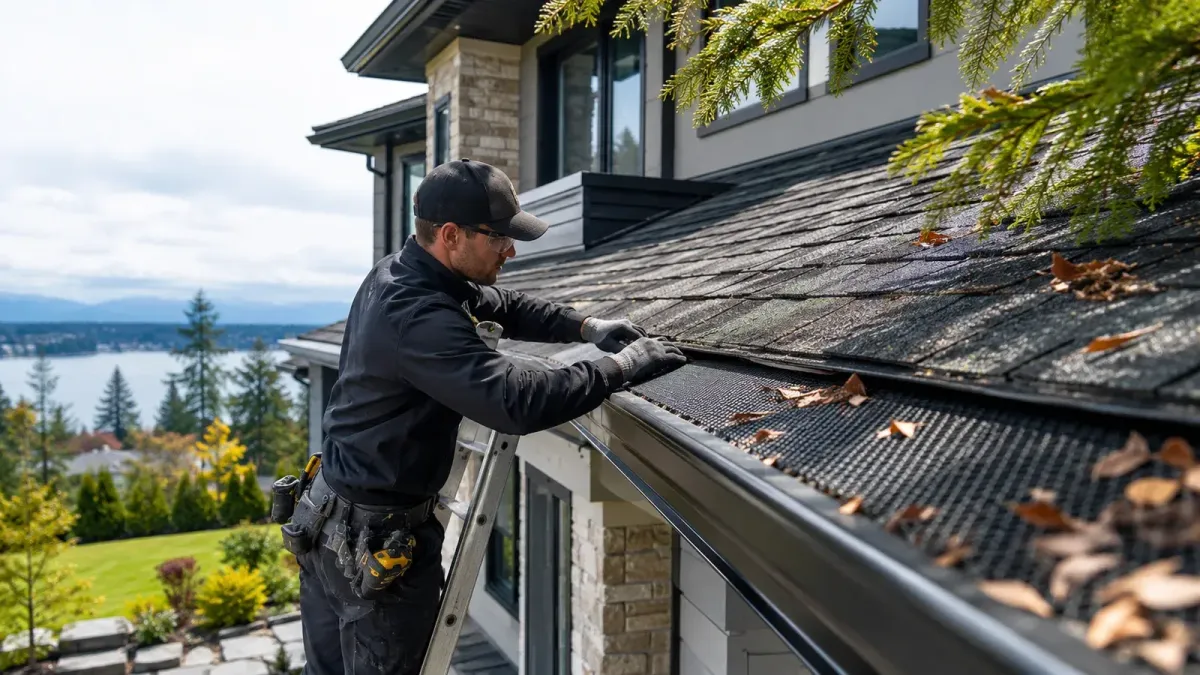
Keep fir needles and debris out of your Bellevue gutters.
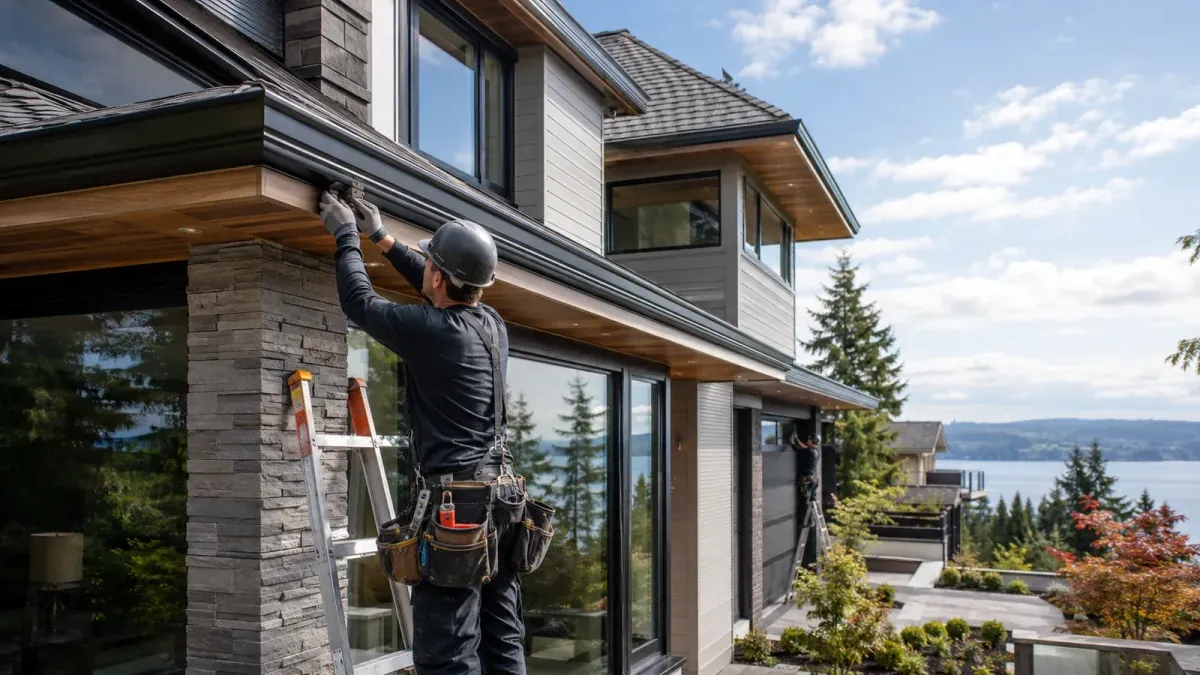
Protect your roof edge with a proper fascia gutter conversion.
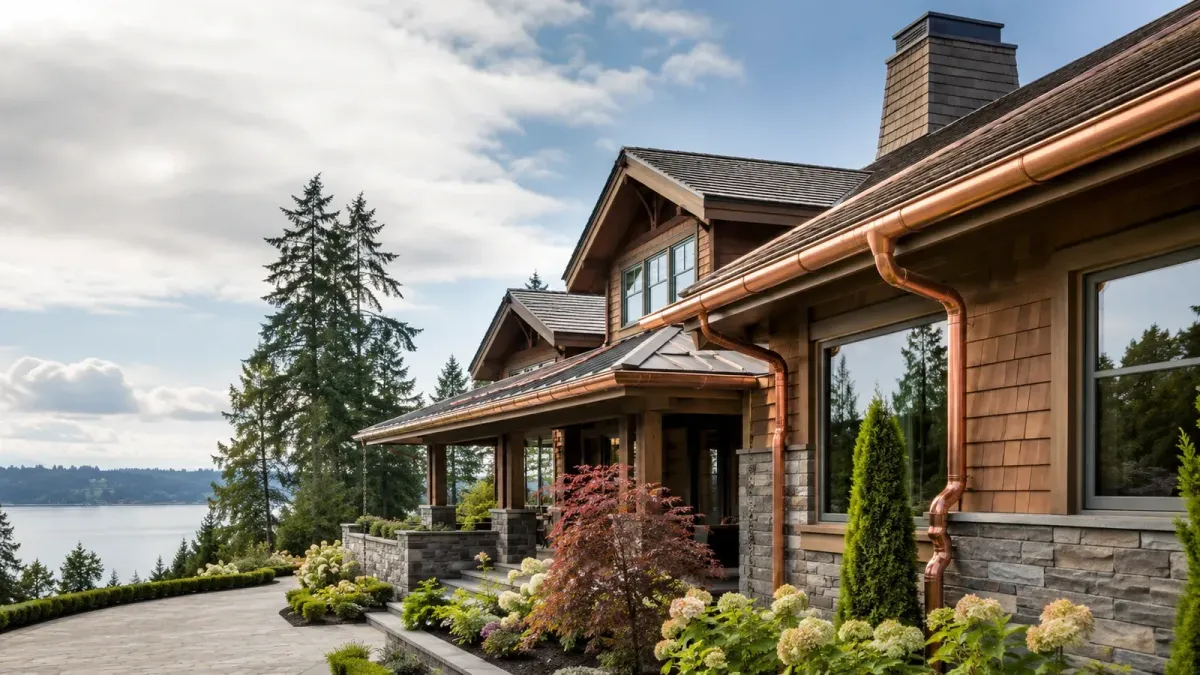
Premium copper gutters that age beautifully on Bellevue homes.
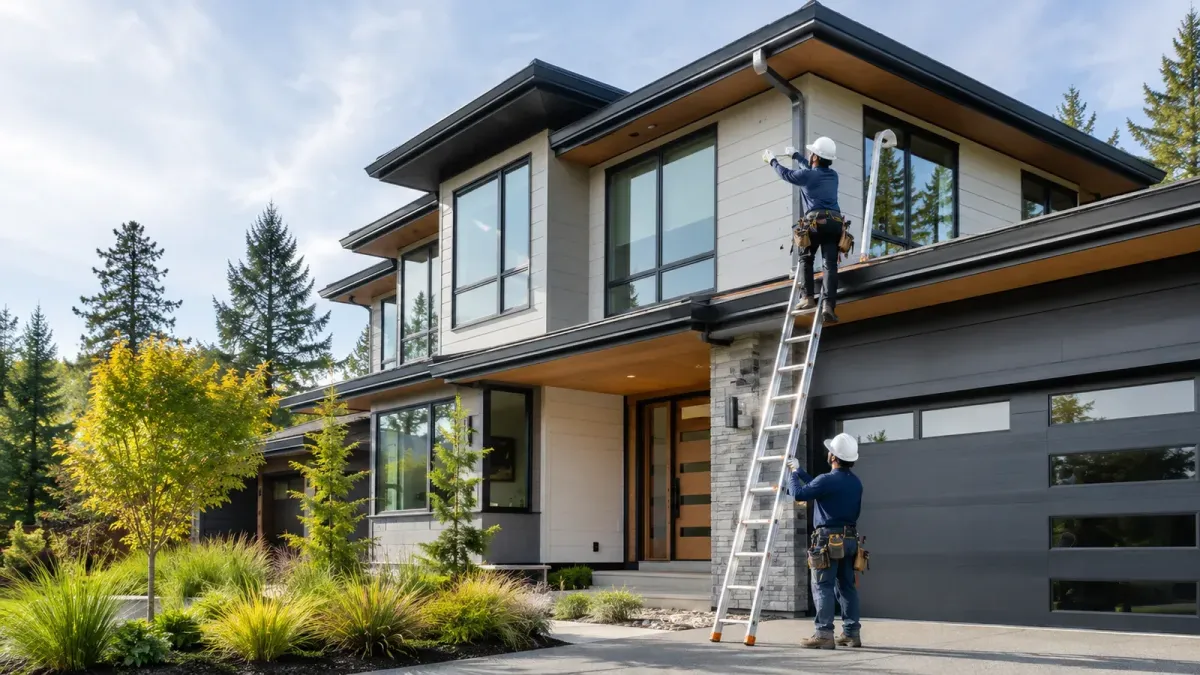
Durable, value-driven aluminum gutters for Bellevue weather.
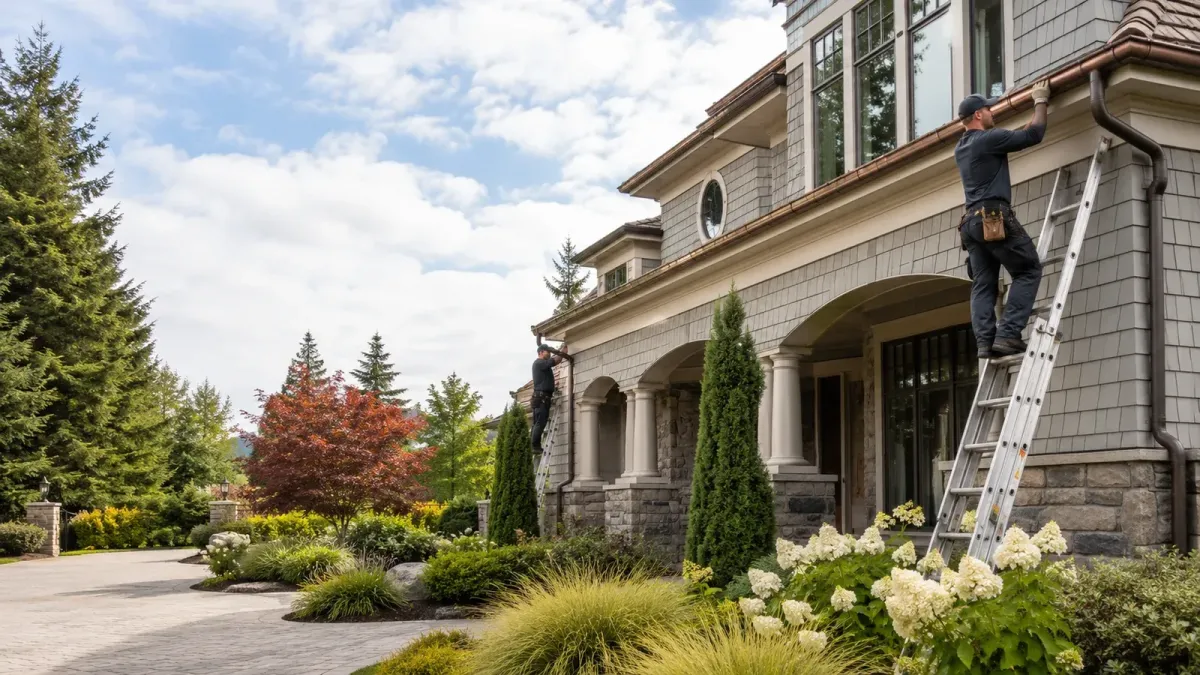
Timeless half-round gutters matched to your Bellevue home.
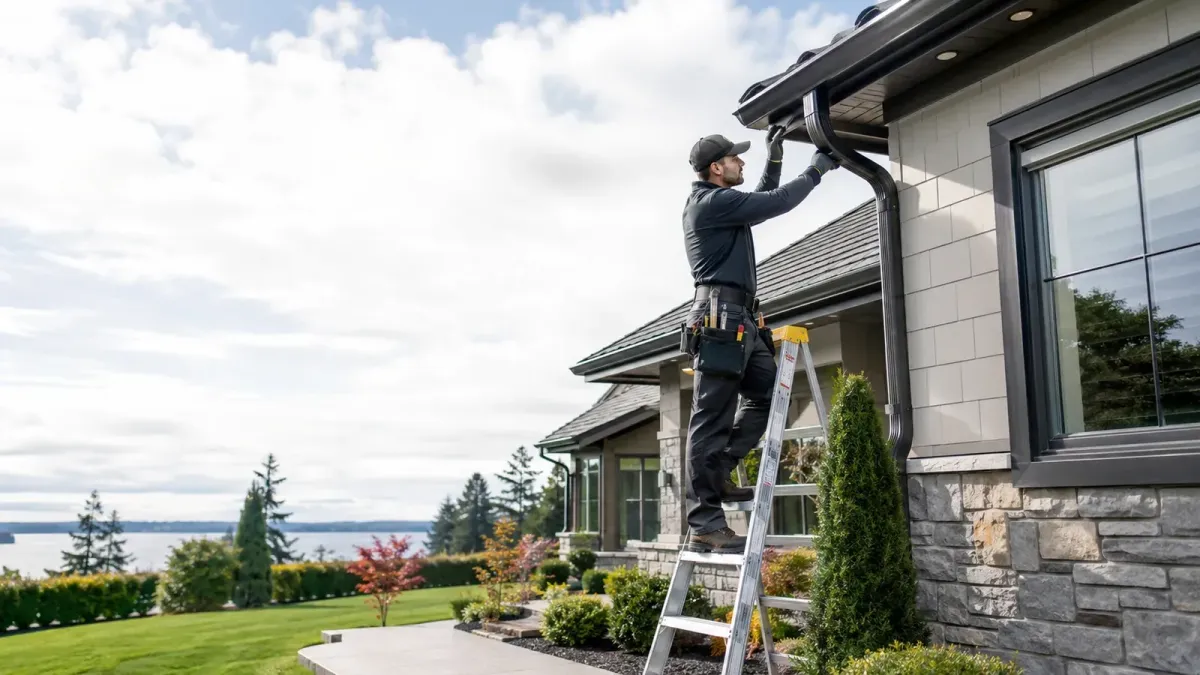
Move stormwater away from your Bellevue foundation for good.
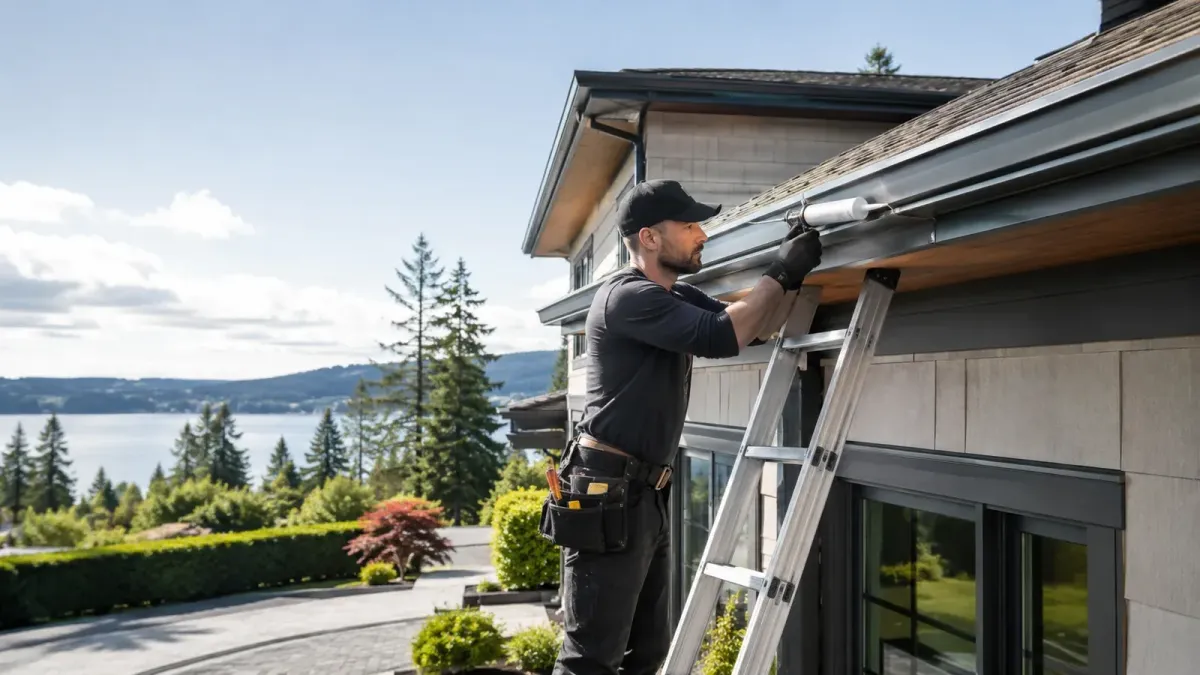
Honest gutter repairs that extend the life of your system.
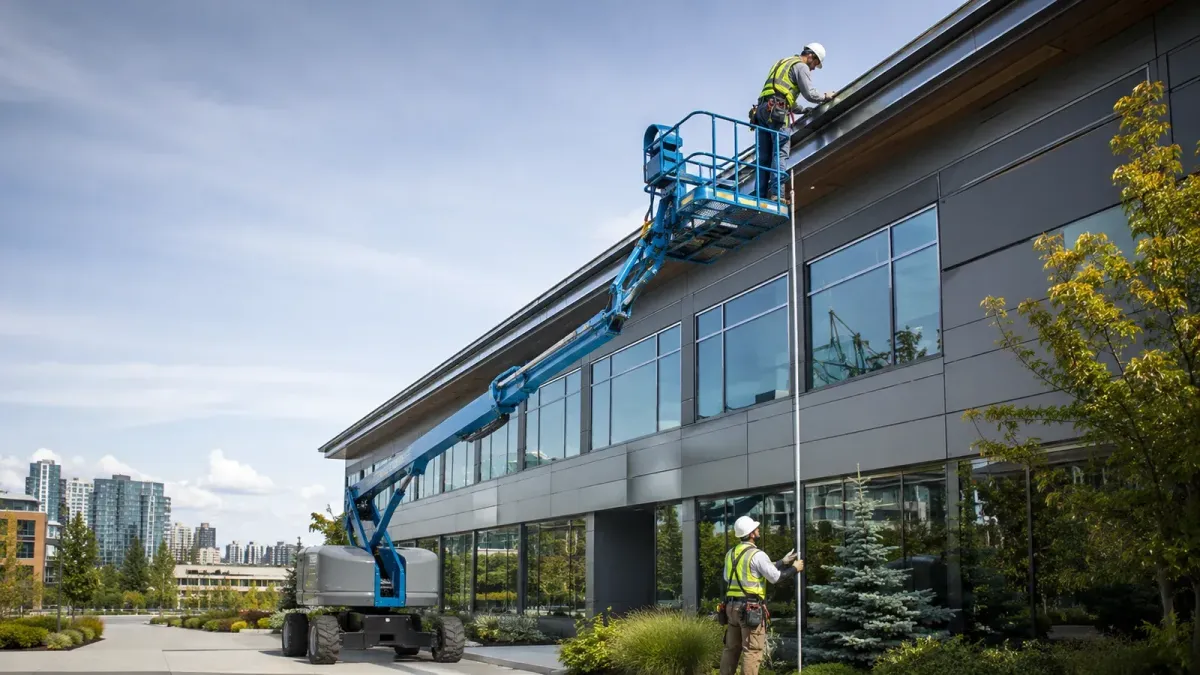
Large-capacity gutter systems for Bellevue commercial properties.
Frequently Asked Questions
Gutter Installation can be complex, and we’re here to provide answers to common questions. Here are some frequently asked questions from our clients.
Frequently Asked Questions about Gutter Installation Bellevue, WA
How much does gutter installation cost in Bellevue, WA?
Cost depends on linear footage, material, and whether you are replacing built-in gutters or hanging new seamless runs. Aluminum is the most budget-friendly option for most Bellevue homes, while copper sits at the premium end. We give a clear written quote after measuring your roofline so there are no surprises.
What gutter size do I need for Bellevue's rainfall?
With forty-plus inches of annual rain, most Bellevue homes do best with 6-inch K-style gutters and oversized downspouts rather than the standard 5-inch. Larger profiles carry more water during the heavy Cascade storms that overwhelm undersized systems.
How do seamless gutters handle fir needles and debris?
Seamless gutters remove the joints where Douglas fir needles and cedar debris usually pack in and cause clogs. Pair them with the right guard system and your gutters keep flowing through fall and winter with far less maintenance.
Should I replace the built-in gutters on my older Bellevue home?
If your 1960s-era home has built-in or box gutters that leak, they are likely rotting the fascia and roof edge behind them. Replacing them with a modern seamless system stops the hidden water damage and is usually more cost-effective than repeated repairs.
Do you handle gutter permits and King County code?
Standard gutter replacement rarely needs a permit, but drainage tie-ins and larger projects can. We work to King County standards on slope, downspout sizing, and discharge so your system performs and stays compliant.
How long do new gutters last in the Pacific Northwest?
With proper installation, aluminum seamless gutters commonly last 20 or more years here, while copper can last several decades. The marine climate is hard on cheap fasteners, so we use corrosion-resistant hardware on every job.
Still Have Questions About Gutter Installation Bellevue, WA?
Speak With a Trusted Gutter Installation Expert Today.
What Our Satisfied Clients Have to Say About Bellevue Gutter Installation
We pride ourselves on delivering great results and experiences for each client. Hear directly from home and business owners who’ve trusted us with their Gutter Installation needs.

They replaced the failing built-in gutters on our 1965 rambler near Lake Hills and finally stopped the water that was wrecking our fascia. Clean work and no leaks through the whole wet season.
Karen M. Bellevue
Our old gutters overflowed every heavy rain. The new seamless aluminum system handles the downpours and the fir needles way better. Crew showed up on time and cleaned everything up.
David R. Redmond
We wanted copper to match our mid-century home and they delivered. The work is clean, the patina is starting to come in, and the whole system drains perfectly even in October storms.
Priya S. Kirkland
The Trusted Gutter Installation Expert Near You
Ready to hear more about expert services at Bellevue Gutter Installation?
Contact us today to receive a detailed, no-obligation quote.
Monday: 8:00 AM – 6:00 PM Tuesday: 8:00 AM – 6:00 PM Wednesday: 8:00 AM – 6:00 PM Thursday: 8:00 AM – 6:00 PM Friday: 8:00 AM – 6:00 PM Saturday: 9:00 AM – 3:00 PM Sunday: Closed | Emergency gutter repair and storm-damage appointments available by request.


